









What happens when one of India’s most visionary filmmakers and one of Europe’s most influential festival heads sit down to decode the future of cinema? A conversation that feels less like a panel and more like two creative minds examining the beating heart of storytelling in an age of algorithms.
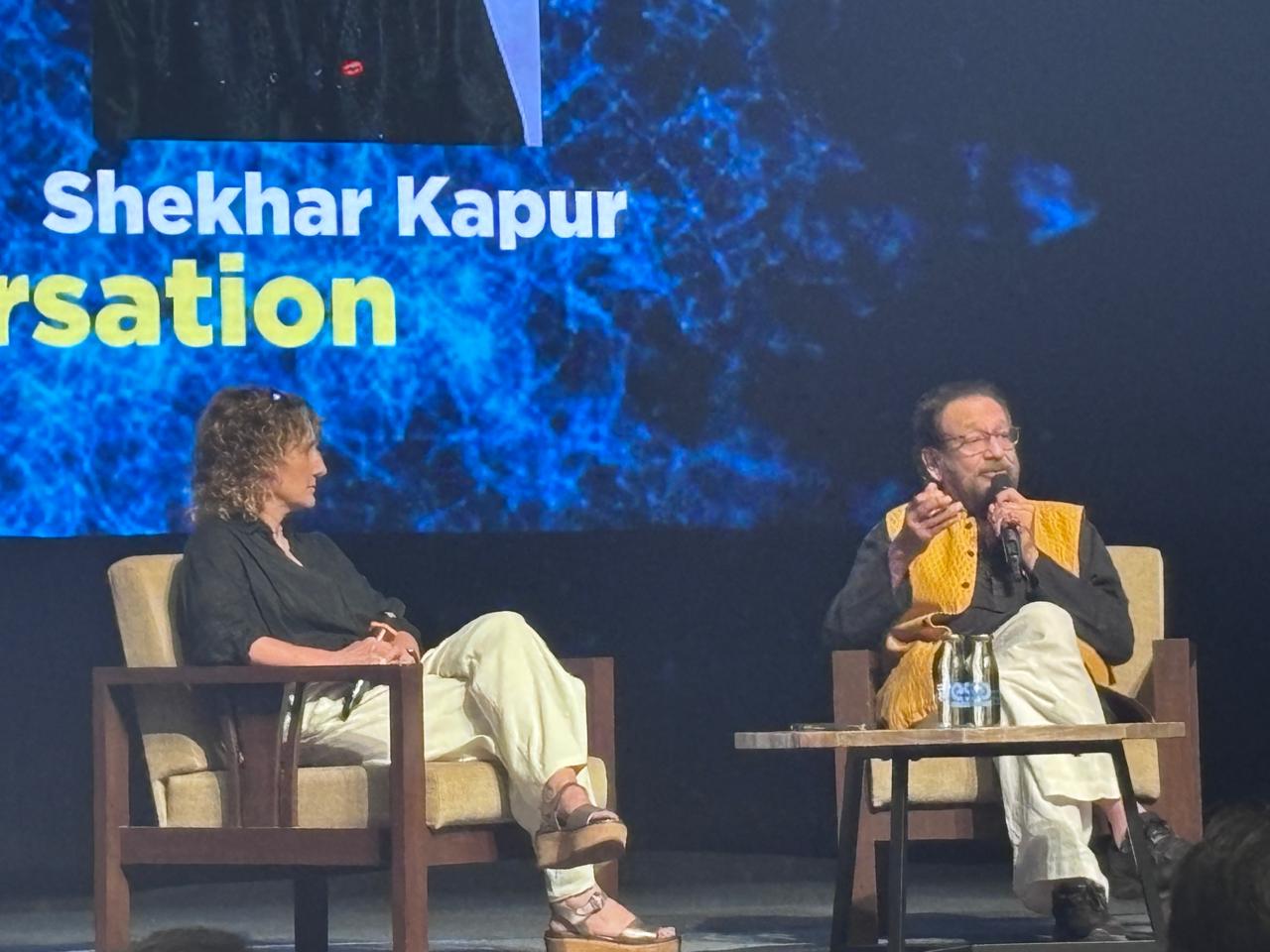
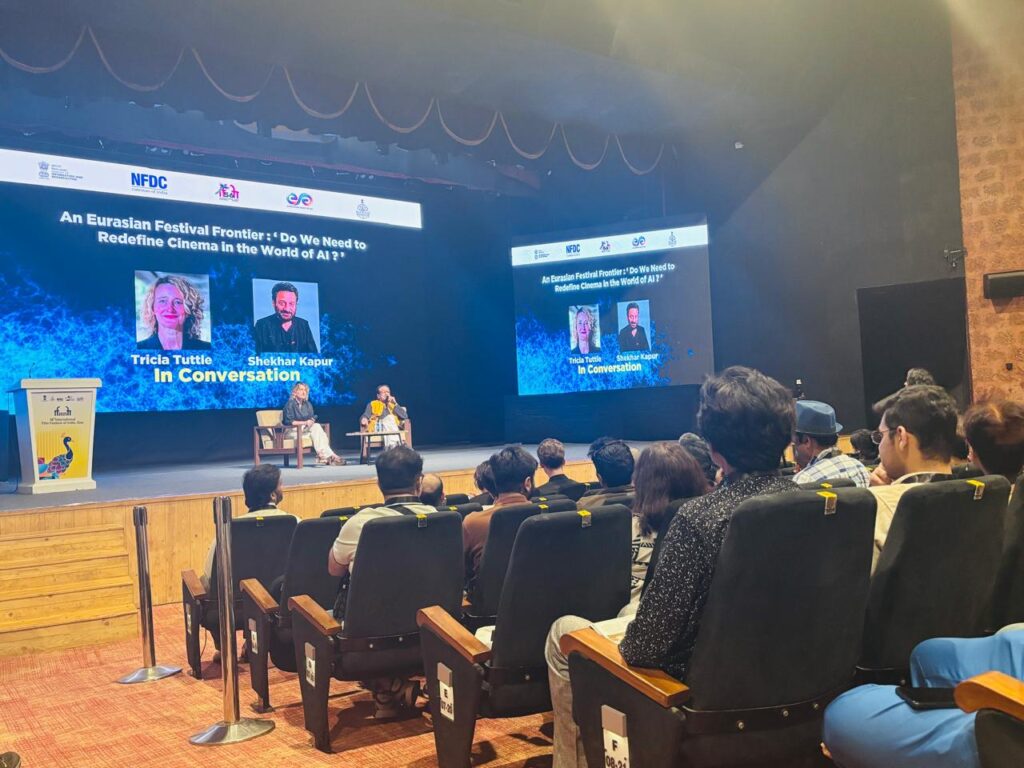
That was the energy at the In Conversation session titled “An Eurasian Festival Frontier: Do We Need to Redefine Cinema in the World of AI?” at the 56th International Film Festival of India, featuring Shekhar Kapur, Festival Director of IFFI, and Tricia Tuttle, Festival Director of the Berlin International Film Festival.
A full-circle moment
The session opened with warmth and nostalgia. Kapur applauded IFFI for eliminating plastic bottles, while Tuttle took the audience back to 1998 — when she attended a young Shekhar Kapur’s masterclass on Elizabeth. “It feels full circle,” she said, bridging a memory of the past with the cinematic future both were about to discuss.
“Cinema survives because human imagination survives”
Technology may evolve, Kapur insisted, but the human mind remains the original engine of creation. From digital film to today’s AI tools, he said every era brings fears that cinema might dissolve — yet cinema endures because imagination endures.
“Ultimately, it is the creator who directs the tool,” he reminded the audience.
Tuttle agreed, recalling the panic that once accompanied digital filmmaking. “But what endures is the idea, the craftsmanship, the humanity,” she said.
Kapur added with poetic clarity:
“AI doesn’t understand pupils.”
No machine, he argued, can replicate the emotional flicker in an actor’s eyes — the micro-variations that bind an audience to a story.
AI as collaborator, not replacement
Kapur offered a glimpse into his new AI-created series War Lord, speaking not as a technophile but as a storyteller discovering new brushes for his canvas. Technology, he insisted, does not redefine the storyteller. The storyteller reshapes technology.
And then came the moment that brought the hall to laughter:
His cook, armed with ChatGPT, handed him a script for Mr India 2.
“I didn’t know whether to praise the meal or the script,” Kapur joked — a reminder of how accessible creative tools have become, and how imagination can sprout in the unlikeliest corners.
Cinema as a shared ritual
Both speakers emphasised that no matter how advanced AI becomes, cinema remains a collective social experience.
“Even with home delivery, people still go to restaurants,” Kapur said, drawing a parallel that resonated with the audience.
Tuttle underscored festivals’ role in keeping adventurous and independent cinema alive — as spaces where audiences can engage deeply, away from the algorithms of mainstream platforms.
Protecting the human ecosystem of filmmaking
The conversation took a thoughtful turn toward the future of film-set work. Tuttle spoke about the irreplaceable value of being on set, sharing her son’s wish to work as part of the crew simply to understand filmmaking up close.
Kapur, meanwhile, expressed concern about losing the experience of saying “action” and “cut,” and the human bonds formed on set — something AI cannot replicate.
“AI is not magic. It’s change.”
During audience questions on plagiarism and ethics, Kapur delivered one of the session’s most powerful lines:
“AI is not magic. It’s not chaos. It’s change. But real storytelling is unpredictable. AI can only imitate the past — not predict the future.”
Plagiarism, he added, stems from creative laziness, not technology.
The future: technology evolves, but the heart of cinema stays human
The session closed on a shared conviction: cinema will transform, tools will change, but the emotional core of storytelling — the human truth — will outlast every technological revolution.
The event concluded with a felicitation of both speakers by Shri Prabhat, Additional Secretary, Ministry of Information and Broadcasting.
In a festival dedicated to celebrating the old, the new, and the next, this conversation reminded everyone of one enduring truth:
Cinema may enter the age of AI, but its soul will always belong to the human imagination.