









Filmmakers Ashutosh Gowariker, Farhan Akhtar and Madhur Bhandarkar reflect on creative freedom, unconventional storytelling and the future of cinema
Three landmark films that redefined Hindi cinema in 2001 came into focus as filmmakers Ashutosh Gowariker, Farhan Akhtar and Madhur Bhandarkar reunited at the 57th International Film Festival of India (IFFI) in Goa, marking 25 years of Lagaan, Dil Chahta Hai and Chandni Bar.
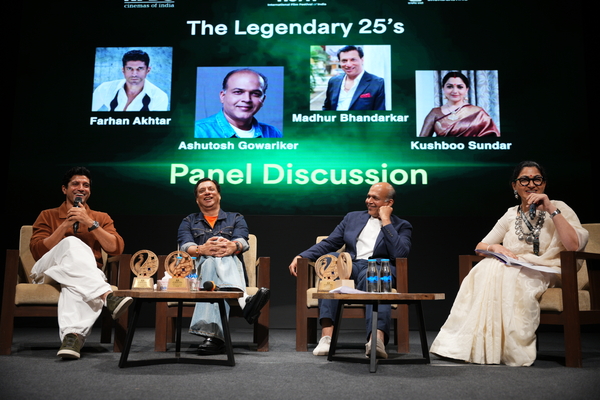
The three filmmakers participated in a special session titled ‘The Legendary 25s’, moderated by actor and producer Khushboo Sundar. The discussion revisited the creative journeys behind the films and explored how unconventional storytelling, creative courage and fresh perspectives helped shape Hindi cinema.
While Lagaan captured the spirit of rebellion through a village cricket match against British colonial rule, Dil Chahta Hai redefined the portrayal of urban youth, friendship and relationships. Chandni Bar, meanwhile, brought the struggles and realities of women in marginalised circumstances to the forefront.
Bhandarkar: AI Cannot Replace the Human Element in Cinema
Madhur Bhandarkar emphasised his commitment to realistic storytelling and subjects that society often hesitates to discuss. Recalling the challenges of making women-centric films, he spoke about how Chandni Bar, Corporate and Fashion emerged from his desire to portray women in their complexities, vulnerabilities and strengths.
“I have always wanted to make films about subjects that people hesitate to talk about or even explore. I am drawn to the stories behind the scenes, the realities that often remain hidden from the public eye. For me, cinema has always been a mirror to society,” he said.
He urged filmmakers to remain committed to their creative convictions rather than follow industry trends or audience expectations.
On the growing influence of artificial intelligence and visual effects, Bhandarkar acknowledged that technology could expand filmmaking possibilities but maintained that it could never replace human emotions and sensitivity.
“AI and VFX can certainly enhance the visual experience and expand the possibilities of filmmaking, but they can never replace the human touch,” he said.
Gowariker: Every New Film Is a Reset to Zero
Ashutosh Gowariker described filmmaking as a continuous process of rediscovery, stating that every new project requires a fresh approach and an open mind.
He pointed out that unconventional films often take time to find their audiences and cautioned against judging their success solely on opening-weekend collections.
“Anything that is new, different or unconventional needs more time to find its audience. We must not judge a film only by its opening weekend,” he said.
Sharing his thoughts on acting, Gowariker highlighted the importance of listening, expressions and pauses in delivering an effective performance.
“For me, a true performance lies in the pauses. Listening is one of the most important qualities of an actor. How an actor listens and reacts to a cue is equally important,” he observed.
He also encouraged filmmakers to trust their stories and allow audiences the freedom to interpret them in their own way.
Farhan Akhtar: Be Fearless and Believe in Your Vision
Farhan Akhtar called upon aspiring filmmakers to embrace originality, overcome creative inhibitions and tell stories they genuinely believe in.
“A director or writer must keep an open heart and mind, and leave their ego behind. Be fearless, believe in your vision and tell the story you truly want to tell,” he said.
Describing a screenplay as a living, breathing entity, Akhtar explained how stories evolve through the collective contributions of writers, actors and technicians. He stressed that filmmaking is fundamentally a collaborative exercise in which individual egos must give way to the larger creative vision.
He also cautioned against allowing excessive promotional activities to overshadow the essence of filmmaking, maintaining that meaningful storytelling and genuine audience connect should remain the priority.
The discussion underlined how Lagaan, Dil Chahta Hai and Chandni Bar challenged established cinematic conventions and demonstrated the importance of creative risk-taking.
Reflecting the theme of the 57th IFFI, ‘Stories Without Borders’, the session highlighted the enduring ability of authentic storytelling to connect with audiences across generations and geographical boundaries.
Twenty-five years after their release, the three films continue to stand as examples of how originality, conviction and human experiences can leave a lasting imprint on Indian cinema.