









The International Film Festival of India (IFFI) found its true identity only when it ceased wandering. Between its inception in Mumbai in 1952 and the early 2000s, IFFI moved erratically across Delhi, Kolkata, Chennai, Bengaluru, and Thiruvananthapuram, alternating between formal competitive editions and travelling Filmotsavs. It lacked a defining atmosphere until November 2004, when the festival dropped anchor along the banks of the Mandovi River in Panaji, Goa, permanently altering both the festival’s prestige and the cultural fabric of the state.
The Vision of 2004: Parrikar’s Audacious Gamble
The idea of making Goa the permanent home of IFFI was spearheaded by then Chief Minister Manohar Parrikar.Inspired by the coastal allure of the Cannes Film Festival on the French Riviera, Parrikar envisioned a festival town where delegates could walk between screening venues, heritage cafes, and riverfront promenades.
The proposal met fierce skepticism from critics and cinema purists. Skeptics questioned whether a small state with modest film exhibition infrastructure could pull off a world-class international event in under a year.
What followed was a sprint of civic engineering and restoration:
- The Old GMC Complex: The colonial-era Goa Medical College building in Campal, founded by the Portuguese in 1842 as the Escola Médico-Cirúrgica de Nova Goa, was restored into the headquarters of the newly formed Entertainment Society of Goa (ESG).
- State-of-the-Art Venues: A four-screen INOX multiplex was erected adjacent to the heritage grounds, complemented by the renovated Kala Academy designed by Charles Correa.
- Urban Facelifts: The DB Bandodkar Marg along the Mandovi promenade was widened and landscaped, with the Patto bridge and riverside parks revitalized to accommodate international delegations.
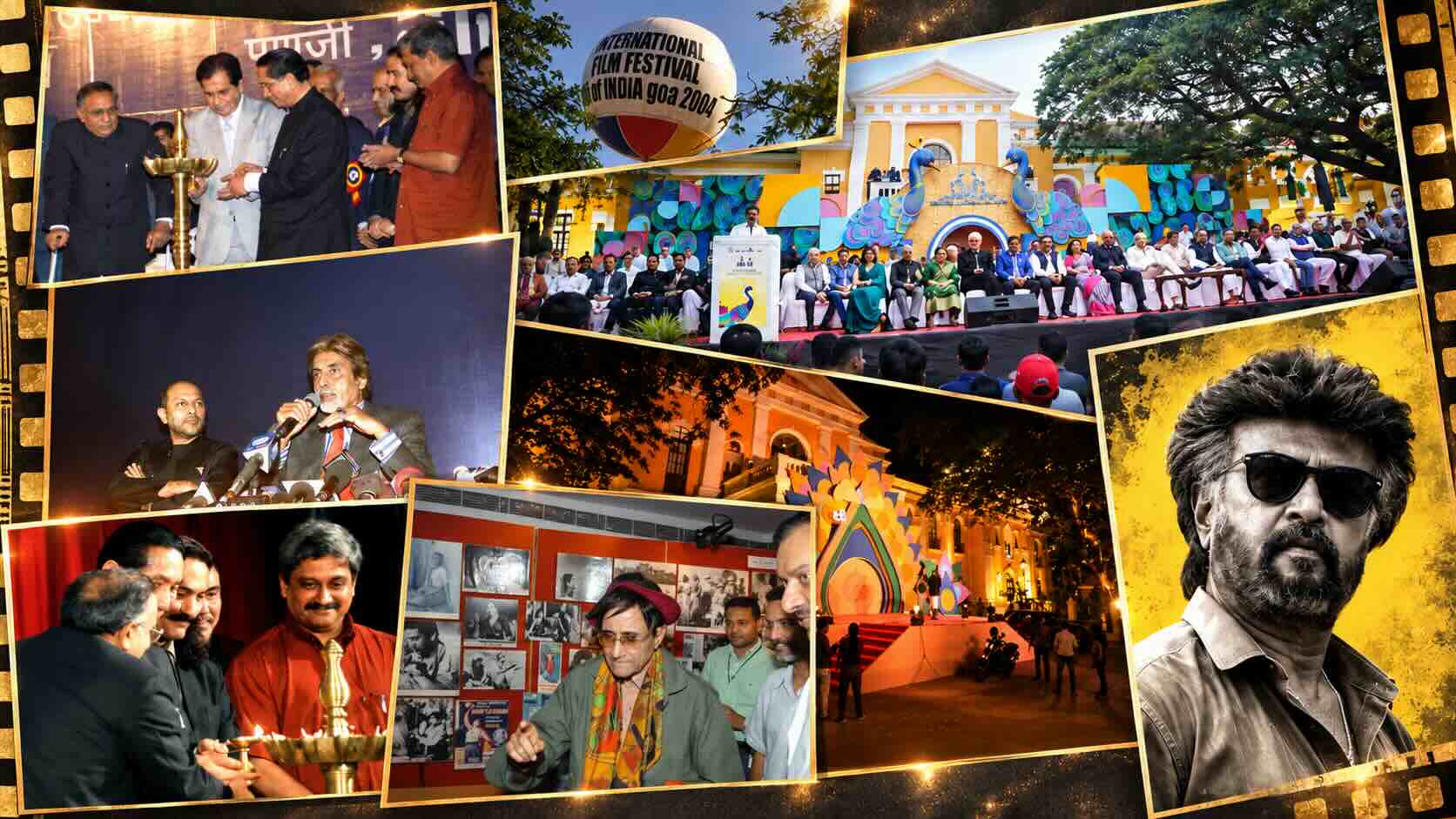
When the 35th IFFI opened on November 29, 2004, with Dilip Kumar and Amitabh Bachchan on stage, the doubts dissolved. The festival drew record delegate crowds, proving that an open-air, relaxed coastal setting was precisely what the traveling cinematic caravan had been missing.
Evolution and the Rise of Film Bazaar
By 2014, the Ministry of Information and Broadcasting officially cemented Goa as IFFI’s permanent home. What started as an exhibition platform soon matured into a vital business and creative ecosystem.
| Milestone | Evolution & Significance |
| 2004 (35th Edition) | First edition in Panaji; establishes ESG and creates modern screening infrastructure along Campal promenade. |
| 2007 (NFDC Film Bazaar) | Launch of the co-production market and South Asian film lab, turning IFFI into an essential industry trade marketplace. |
| 2014 (Permanent Status) | Ministry of I&B formally signs a long-term memorandum declaring Goa the non-rotational permanent venue. |
| 2019 (Golden Jubilee) | 50th edition marks extensive digital retrospectives, international masterclasses, and global master tributes. |
| 2021–Present | Introduction of competitive OTT awards, the “Creative Minds of Tomorrow” initiative, and integration of regional Goan cinema sections. |
The turning point for the festival’s industry relevance came with the NFDC Film Bazaar, held concurrently at the Goa Marriott in Miramar. The market became a breeding ground for South Asian independent cinema, nurturing critically acclaimed titles like The Lunchbox, Titli, Court, and Ship of Theseus before their international breakthroughs.
Transforming Goan Cinema and Cultural Identity
Before 2004, Konkani cinema had produced only a handful of landmark films across several decades. The arrival of IFFI exposed local storytellers, editors, and directors directly to masterclasses with world-renowned auteurs like Martin Scorsese, Carlos Saura, and Wong Kar-wai.
This immersion catalyzed a Konkani cinema renaissance:
- Regional Competitions: Local films earned dedicated screening packages and competitive slots within the festival lineup.
- National and Global Acclaim: Filmmakers like Laxmikant Shetgaonkar (The Man Beyond the Bridge,which won the FIPRESCI prize at Toronto) and Bardroy Barretto (Nachom-ia Kumpasar, which won multiple National Film Awards) emerged from an environment energized by IFFI’s presence.
- Film Tourism: Beyond hosting, Goa transformed into one of India’s most favored filming destinations,prompting the state to enact dedicated film financing and single-window shooting policies.
Every late November, Panaji sheds its quiet administrative routine. The tree-lined streets of Campal light up with cinema installations, open-air beach screenings bring world cinema to Miramar, and the Mandovi riverfront fills with students, festival delegates, and international jury members debating technique late into the tropical night. The wanderer of 1952 has found in Goa not just a venue, but its signature spirit.